Pillar Guide | November 15, 2025
Muscle Twitching in Sleep: Causes, Anxiety, and When to Worry
If your body seems to come alive with pops, jerks, and flutters the moment you try to rest, you are not alone. Here is the definitive medical guide to quieting the nighttime noise.
Quick answer: Twitching in your sleep — or the sudden jolts as you drift off — is almost always benign. There are two common types:
- Hypnic jerks (sleep starts): the single, whole-body "falling" jolt as you nod off — up to 70% of people get them
- Fasciculations (sleep twitches): small, repeated pops in the calves, feet, or elsewhere from a hyper-excitable nervous system
Both are worsened by stress, caffeine, poor sleep, and low magnesium — and both feel louder at night simply because nothing else is competing for your attention. They are rarely a sign of anything serious unless paired with true muscle weakness, wasting, or breathing problems.
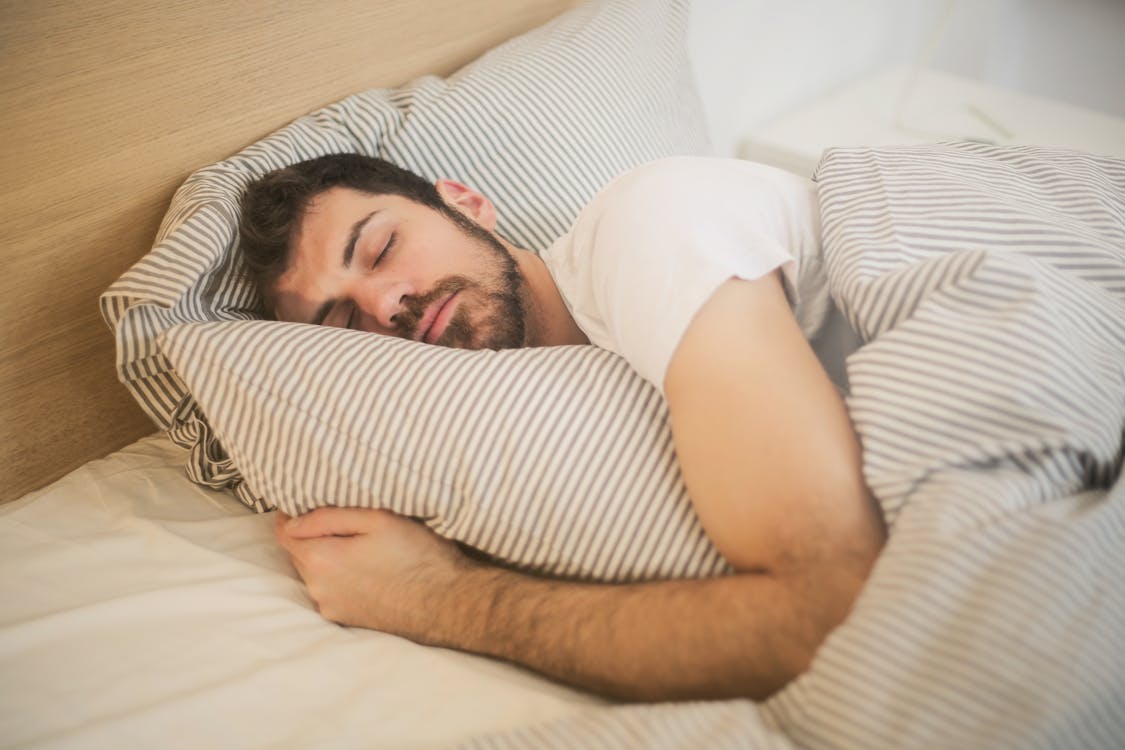
The house is quiet. The lights are out. You are exhausted after a long day, and your body is desperate for rest. But just as you begin to drift off, it starts. A thump in your calf. A flutter in your eyelid. A sudden jerk of your leg that wakes you up with a gasp.
For millions of people, muscle twitching in sleep is not just a nuisance; it is a source of profound anxiety. It turns the sanctuary of the bedroom into a battleground of body monitoring. You lie there, waiting for the next pop, wondering, "Why is my body doing this? Is this normal? Is this the start of something serious?"
If this sounds familiar, take a deep breath. You have found the right guide.
This article is designed to be your anchor. We are going to move past the scary headlines and dive into the actual neurology of sleep twitching. We will distinguish between harmless "hypnic jerks" and Benign Fasciculation Syndrome (BFS), explore why anxiety is the fuel for the fire, and provide you with evidence-based strategies to calm your nervous system and reclaim your sleep.
Why Do Muscles Twitch During Sleep?
To understand why you are twitching, we first need to understand how your nervous system handles the transition from "awake" to "asleep."
Your nervous system is composed of two main parts: the Central Nervous System (brain and spinal cord) and the Peripheral Nervous System (the nerves that branch out to your muscles). During the day, your brain sends voluntary signals to your muscles to move. However, when you sleep, your brain is supposed to engage a mechanism called "sleep atonia"—essentially a temporary paralysis that prevents you from acting out your dreams.
Twitching in sleep occurs when there is a "glitch" in this switch-over process, or when the peripheral nerves remain hyper-excited despite the brain trying to shut down.
Think of your body like a car engine. Ideally, when you park the car (sleep), the engine turns off completely. But if the engine has been running hot all day (anxiety/stress), or if the fuel mix is off (electrolytes), the engine might sputter and backfire a few times before it finally cools down. Those "backfires" are the fasciculations and jerks you feel.
Hypnic Jerks vs Muscle Fasciculations: What’s the Difference?
Not all night movements are the same. It is crucial to distinguish between the two most common types of sleep movement, as they have different causes.
1. Hypnic Jerks (Sleep Starts)
A hypnic jerk is that sudden, violent "jolt" that happens right as you are falling asleep. You might feel a sensation of falling, followed by a whole-body contraction that wakes you up.
- Definition: An involuntary myoclonic twitch often accompanied by a hallucination of falling.
- Why they occur: As your muscles relax deeply during the transition to sleep, your brain sometimes misinterprets this relaxation as "falling down." In a primitive protective reflex, the brain fires a signal to the muscles to "catch" you.
- Are they normal? Yes. Up to 70% of humans experience them. They are exacerbated by caffeine, stress, and sleep deprivation. For the full picture, see our guide to hypnic jerks and how to stop them.
2. Muscle Fasciculations (The "Popcorn" Effect)
Unlike the single violent jolt of a hypnic jerk, fasciculations are small, rhythmic, or random twitching of specific muscle fibers. This is the "pop... pop... pop" sensation you might feel in your calves or arches.
- Definition: Spontaneous discharge of a single motor unit.
- Why they occur: These are usually signs of peripheral nerve hyperexcitability (BFS). The nerve ending is irritated or sensitive and fires without a command from the brain.
- The Anxiety Connection: While hypnic jerks are a brain reflex, fasciculations are often a result of chemical imbalances (cortisol/adrenaline) at the nerve ending itself.
The Most Common Causes of Twitching in Sleep
If you are experiencing calf twitching at night or body-wide popping, it is rarely idiopathic (without cause). There is almost always a trigger. Here are the most common ones, ranked by frequency.
Stress & Anxiety
Anxiety is not just "in your head"; it is a systemic physiological state. When you are chronically stressed, your body maintains high levels of cortisol and adrenaline. These chemicals are designed to keep your muscles primed for "fight or flight."
The Mechanism: Adrenaline lowers the excitation threshold of your motor neurons. Normally, it takes a strong signal from the brain to make a muscle move. Under the influence of stress hormones, it takes only a tiny, stray electrical impulse to trigger a twitch. When you lie down to sleep, you might be mentally tired, but your nerves are chemically wired.
Magnesium Deficiency
Magnesium acts as the "brake pedal" for your nervous system. It blocks calcium (the "gas pedal") from entering nerve endings and causing contractions. If you are deficient in magnesium—which is common in modern diets—your nerves lose their natural braking system. This leads to magnesium for muscle twitching being a primary first-line treatment.
Electrolyte Imbalance
Nerves communicate via electricity, generated by the exchange of ions (Sodium, Potassium, Calcium). If these ratios are thrown off—perhaps by a salty dinner, alcohol, or sweating—the electrical signals can become erratic, leading to misfiring during rest.
Dehydration
Water is the medium in which your nerves operate. Even mild dehydration thickens the blood and alters the concentration of electrolytes. The space between the nerve and the muscle (the synaptic cleft) requires precise hydration to function correctly. When dry, signals can "arc" or misfire, causing twitching.
Sleep Deprivation
This is a vicious cycle. Twitching keeps you awake, and lack of sleep makes you twitch. Sleep deprivation increases the excitability of the cortex. It removes the "dampening" filters that the brain normally uses to suppress stray signals.
Overexertion / Exercise
Did you go for a run or lift weights today? Muscle twitching after exercise is extremely common. Exercise causes micro-trauma to the muscle fibers and creates lactic acid. As the muscle attempts to repair itself during sleep, it often releases electrical discharges, resulting in twitching.
Caffeine and Stimulants
Caffeine has a half-life of 5-6 hours. If you have a coffee at 4 PM, half of that caffeine is still active in your system at 10 PM. Caffeine blocks adenosine (the chemical that makes you sleepy) and increases dopamine signaling, keeping motor neurons in a heightened state of alert.
Post-Viral Nerve Sensitivity
Many people report the onset of BFS or sleep twitching after a viral illness (like COVID-19 or the flu). This is due to a temporary inflammatory response where the immune system slightly irritates the peripheral nerves. This usually resolves with time.
Medications
Certain medications, specifically SSRIs (antidepressants), corticosteroids, and excessive use of albuterol (asthma inhalers), list fasciculations as a known side effect.
Can Benign Fasciculation Syndrome (BFS) Cause Twitching in Sleep?
Absolutely. In fact, twitching while at rest is a hallmark of BFS.
In BFS, the peripheral nerves are chronically hyperexcitable. While you are moving during the day, voluntary muscle contractions mask these small twitches. You simply don't feel them because you are walking, talking, or working.
When you stop moving, that "masking" effect disappears. The background noise of the BFS becomes the only signal, and suddenly it feels like your legs are popping uncontrollably.
The Reassurance: The key differentiator is weakness. If you have muscle twitching without weakness, regardless of how violent or frequent it is at night, it points strongly toward BFS and away from degenerative conditions.
Why Twitching Feels Worse at Night (The “Silent Environment” Effect)
Patients frequently tell their neurologists, "I'm fine all day, but the second I lie down, it's a party in my legs."
This phenomenon is due to Sensory Gating.
- Daytime: Your brain is processing millions of bits of data: visual sights, conversations, the feeling of clothes, traffic noise. Your brain actively filters out "low priority" signals like small muscle twitches.
- Nighttime: You turn off the lights. It is quiet. You are lying still. The external data stream stops. Suddenly, the brain turns its attention inward. That tiny twitch in your arch, which has been happening all day, now feels like a massive thump because it is the only thing happening.
This is amplified by Hypervigilance. If you are scared of the twitching, your brain tags the sensation as a "threat." It then amplifies the signal, making you feel even the tiniest vibration.
Twitching During Sleep vs Twitching When Falling Asleep
It is helpful to differentiate between hypnagogic twitching (falling asleep) and actual sleep movements.
Hypnagogic/Hypnopompic Twitching: This happens in the twilight zone between wake and sleep. It is often driven by the brain's "mode switching" errors. This is where hypnic jerks live.
True Sleep Fasciculations: If your partner notices your calves twitching while you are deep asleep, this is purely physiological. It confirms that the twitching is not "all in your head," but it also confirms it is likely metabolic or related to BFS, as the conscious brain is offline.
Others feel less of a jerk and more of a buzzing internal vibration or tremor as they drift off — another benign, common BFS experience we explore in internal tremors at night.
When Muscle Twitching at Night Is NOT Serious
It is easy to panic in the middle of the night. Here is a checklist to help you rationalize the symptoms and lower your anxiety.
- No Clinical Weakness: You can still stand on your toes, turn door knobs, and lift your head.
- Episodic Nature: The twitching comes and goes. It might be bad for a week, then gone for a week. Degenerative diseases do not take breaks.
- Widespread Location: One night it's your left calf, the next it's your right eyelid, then your tricep. This "wandering" twitching is classic body twitching all over associated with BFS.
- Trigger-Based: You notice it's worse after a stressful day, a heavy workout, or a night of drinking.
When Nighttime Twitching Could Be a Red Flag
While rare, there are instances where nighttime movements warrant a doctor's visit.
- Progressive Weakness: You are tripping over your own feet or dropping your coffee cup in the morning.
- Sleep Apnea Signs: If the twitching is accompanied by gasping, choking, or stopping breathing.
- Rhythmic Kicking (PLMD): If your legs kick rhythmically every 20-40 seconds all night, this is likely Periodic Limb Movement Disorder, which is treatable but distinct from BFS.
- Atrophy: Visible loss of muscle mass in the specific area that is twitching.
Understanding the BFS vs ALS differences can be helpful, but remember: ALS is a disease of failure, not a disease of feeling. If you feel twitching but your muscles work fine, the odds are in your favor.
How to Reduce Nighttime Twitching Naturally
You cannot always force a nerve to stop firing, but you can create an environment where it is less likely to do so.
1. The Hydration Strategy
Do not chug a liter of water right before bed (waking up to pee ruins sleep cycles). Instead, front-load your hydration. Drink consistently throughout the morning and afternoon. Stop heavy fluids 2 hours before bed.
2. Magnesium Glycinate
Magnesium is the supplement most people reach for here, and glycinate is the calmest, best-absorbed form. Supplement labels commonly suggest around 200-400mg of elemental magnesium in the evening, but confirm the right amount for you with your doctor or pharmacist. We cover it fully in our guide to magnesium for sleep.
3. Electrolytes Before Bed
A small pinch of sea salt in a sip of water, or a low-sugar electrolyte drink, can help stabilize the ion balance in your nerves through the night.
4. Pre-Sleep Stretching
Tight muscles are twitchy muscles. Spend 5 minutes gently stretching your calves and hamstrings. This lengthens the muscle fibers and reduces the tension on the nerve endings.
5. Blue Light Reduction
Blue light suppresses melatonin. Low melatonin means lighter sleep, and lighter sleep means more hypnic jerks. Put your phone away 1 hour before bed.
How Long Does It Take for Sleep-Related Twitching to Improve?
If you start these protocols tonight, when will the twitching stop?
- Hydration/Electrolytes: 24-48 hours.
- Magnesium Repletion: 2-4 weeks of consistent supplementation.
- Stress/Anxiety Reduction: 4-8 weeks. The nervous system is slow to heal. It takes time to downregulate from a state of hyper-arousal.
- BFS Stabilization: Variable. For some, it is a chronic condition that waxes and wanes. For others, persistent calf twitching resolves once the anxiety about the twitching is gone.
Frequently Asked Questions
Supplements That Support the Nervous System at Night
While we do not endorse specific brands, these compounds are supported by research for calming nerve activity:
- Magnesium Glycinate: Highly absorbable, gentle on the stomach, and promotes sleep.
- L-Theanine: An amino acid found in green tea that increases alpha brain waves (relaxation) without sedation.
- Electrolytes (Potassium/Sodium): Essential for proper nerve signaling.
- Vitamin D: Critical for overall neurological health.
- Omega-3 Fatty Acids: Supports the myelin sheath of the nerves.
Disclaimer: This article is for educational purposes only and does not constitute medical advice. While muscle twitching in sleep is usually benign, persistent symptoms should be evaluated by a healthcare professional.
Scientific References
This article is grounded in peer-reviewed neurological and sleep research.
- Chiaro G, et al. Hypnic jerks: clinical and neurophysiological characteristics. Sleep Medicine. 2016.
View on PubMed - American Academy of Sleep Medicine. Sleep Starts (Hypnic Jerks).
View Source - Turner MR, Talbot K. Mimics and chameleons in motor neurone disease. Practical Neurology. 2013.
Read Full Text at BMJ - National Institute of Neurological Disorders and Stroke (NINDS). Myoclonus Fact Sheet.
Visit NINDS
© 2026 BFS Organization. All rights reserved.
Not medical advice. Always consult with a healthcare professional.