Sleep & Twitching | October 6, 2026
Hypnic Jerks: Why Your Body Jolts as You Fall Asleep
You are just drifting off when your whole body jerks and you are wide awake again, heart pounding. It is one of the most common sleep experiences there is, and one of the most misunderstood.
Quick answer: A hypnic jerk (or "sleep start") is a sudden, involuntary jolt of the muscles, often with a falling feeling, right as you fall asleep. Around 70% of people get them and about 10% get them daily. They are harmless, but they come more often with:
- Stress and anxiety
- Caffeine or nicotine later in the day
- Sleep loss or an irregular sleep schedule
- Hard exercise late in the evening
- Some medications, including certain antidepressants
They are not a sign of ALS. See a doctor if the jerks happen throughout the night rather than only as you drift off, injure you, or come with tongue-biting, wetting the bed or confusion afterwards.
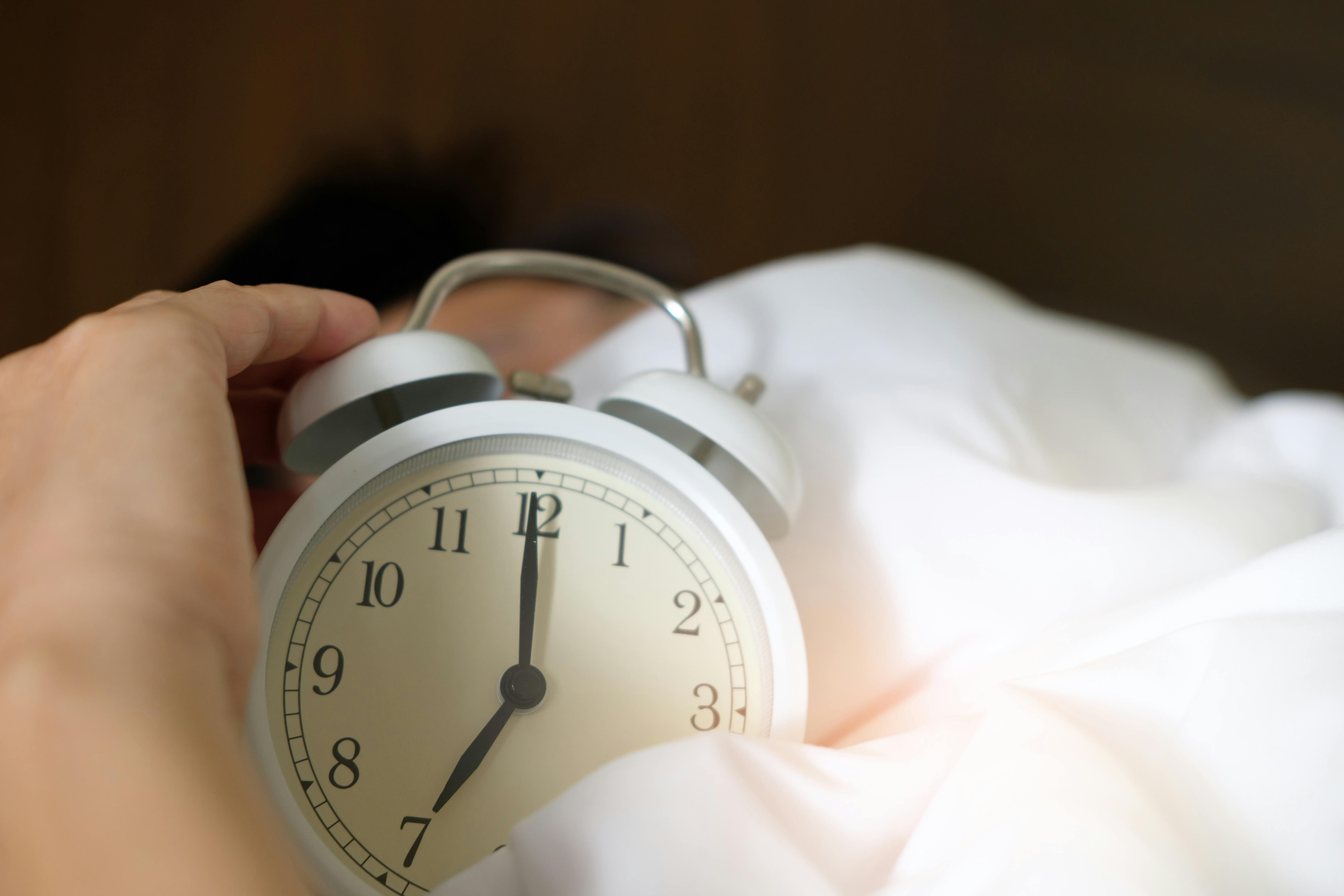
It happens in the doorway of sleep. Your thoughts have started to loosen, your body feels heavy, and then, without warning, a leg kicks, your arms jump, or your whole body lurches as if you have stepped off a kerb in the dark. You are suddenly awake, a little startled, sometimes with your heart racing. Some nights it happens once. Other nights it happens three or four times in a row, just as you are about to go under.
If you already live with twitching muscles, that jolt can feel like one more piece of evidence that something is wrong with your nerves. It is not. Hypnic jerks are a normal feature of how the human brain falls asleep, and understanding why they happen is usually the first step to having fewer of them.
What a Hypnic Jerk Actually Is
A hypnic jerk is a type of myoclonus: a brief, shock-like contraction of a muscle or group of muscles that you did not choose to make. "Myoclonus" sounds medical, but you have met it before. Hiccups are a form of myoclonus too. When it happens only at the moment of falling asleep, it is called a hypnic jerk, a hypnagogic jerk, a sleep start or benign sleep myoclonus. "Benign" is the important word.
Falling asleep is not a switch; it is a hand-over. As you drift off, the parts of the brainstem that keep you alert and upright gradually step back, your muscles relax, your breathing slows and your blood pressure dips. Researchers think a hypnic jerk is a brief misfire during that hand-over: the alerting system gives one last burst just as the muscles let go, and the result is a sudden, whole-body twitch.
Nobody knows for certain why the brain does this. One popular theory is that the brain misreads the sudden relaxation of sleep onset as a sign that you are physically falling, and fires a reflex to "catch" you. That would explain why so many jerks come with a falling or tripping sensation, and why some people briefly see a flash of light or a dream-like image at the same moment. It is a theory, not a proven fact, but the experience it describes is very real and very common.
What It Feels Like
People describe hypnic jerks in remarkably similar ways:
- A sense of falling or missing a step, followed by a jolt
- A single leg kick or an arm that flings out
- The whole body lurching, sometimes enough to shake the bed
- A brief flash, image or sound as you drift off
- Waking with a racing heart or a burst of adrenaline afterwards
That last point matters. The racing heart is your body's normal startle response to being woken suddenly. It is not a separate symptom, and it settles within a minute or two.
Why Some People Get So Many
Almost everyone has the occasional hypnic jerk. What turns them into a nightly problem is usually a nervous system that is running "hot" at bedtime. The common amplifiers are:
1. Stress and anxiety
An anxious brain does not let go of alertness easily. When you are stressed, the systems that keep you vigilant are more reluctant to hand over to sleep, and that tug-of-war makes the transition bumpier. This is the single biggest reason hypnic jerks cluster during difficult weeks.
2. Caffeine and nicotine
Both are stimulants, and both linger. Caffeine can still be active many hours after your last cup, so an afternoon coffee may be nudging your nervous system at 11pm. Nicotine works on the same alerting pathways.
3. Sleep loss and irregular hours
When you are overtired, your brain tends to plunge into sleep faster and more abruptly, which seems to make sleep starts more likely. Shifting bedtimes, late nights and jet lag all do the same.
4. Vigorous exercise late in the evening
Regular exercise improves sleep overall, but a hard session close to bedtime leaves your heart rate, body temperature and adrenaline elevated just when you are trying to wind down.
5. Some medications
Stimulant medicines, some antidepressants (including SSRIs) and certain other drugs that act on the nervous system can make hypnic jerks more frequent. If you suspect a medication, raise it with the prescriber. Never stop or change a prescribed medicine on your own.
6. A twitchy nervous system (BFS)
People with benign fasciculation syndrome often report more sleep starts, along with twitching and internal buzzing as they lie down. That fits: a nervous system that is already excitable, plus a mind that is scanning the body for the next twitch, makes for a noisy hand-over into sleep.
The Fear Loop That Keeps Them Coming
Hypnic jerks have a nasty way of feeding themselves. You get jolted awake. Adrenaline spikes. Now you are lying there, waiting for the next one, and that watchfulness is exactly the state of alert that makes another jerk more likely. After a few bad nights, bedtime itself starts to feel tense, and the pattern locks in.
The way out is less about stopping the jerk and more about stopping the alarm. When you genuinely understand that the jolt is a harmless glitch in the hand-over to sleep, it loses its power to wake you fully, and most people find the jerks fade as the worry does.
Hypnic Jerks vs Other Night-Time Movements
If you twitch at night, it helps to know which kind of movement you are having, because they mean different things:
| Movement | When it happens | What it feels like |
|---|---|---|
| Hypnic jerk | Only as you fall asleep | One sudden jolt, often with a falling feeling. Harmless. |
| Benign twitch (fasciculation) | Any time, often worse at rest | A small flicker or rippling in one spot. See our guide to twitching during sleep. |
| Restless legs | Evening, while sitting or lying still | An uncomfortable urge to move the legs that eases when you move them. Worth discussing with a doctor. |
| Periodic limb movements | Repeatedly through the night, during sleep | Rhythmic kicking you may not notice, though a bed partner does. Worth discussing with a doctor. |
The key difference is timing. A hypnic jerk belongs to the moment of falling asleep. Movements that keep happening once you are asleep, or that a partner sees as regular kicking through the night, are a different pattern and deserve a proper assessment.
"Could This Be ALS?"
If you have spent time reading about twitching, this fear may be sitting behind everything else. The honest answer is reassuring: hypnic jerks are not how ALS shows itself. ALS is defined by progressive weakness: muscles that steadily lose strength and visibly shrink. A whole-body jolt as you fall asleep, in someone whose strength is normal during the day, is the same harmless event that most of the population experiences.
If you are worried about weakness, the person to see is a doctor, who can test your strength properly. For the full picture of how benign twitching differs from the conditions people fear, read BFS vs ALS.
Does Magnesium Help?
It is one of the most common questions, so here is the straight answer: there are no studies of magnesium for hypnic jerks specifically. Magnesium is involved in normal muscle and nerve function, and some people find it helps them relax at night, particularly if their diet is low in it. That is a reasonable thing to discuss with a doctor or pharmacist, especially if you take other medicines or have kidney problems. We cover the evidence in detail in magnesium for sleep.
How to Stop Hypnic Jerks

You cannot switch hypnic jerks off completely, but you can make the hand-over into sleep much smoother:
- Set a caffeine cut-off. Stop caffeine by early afternoon for two weeks and see what changes. Drop nicotine in the evening too.
- Keep regular hours. Going to bed and getting up at the same times steadies the sleep transition more than almost anything else.
- Move hard workouts earlier. Keep intense exercise to the morning or afternoon, and keep evening movement gentle.
- Build a wind-down. Thirty to sixty minutes of dim light, no work and no doom-scrolling tells your nervous system it is safe to let go.
- Breathe slowly as you settle. A slow, longer out-breath (for example, in for four, out for six) calms the alerting system that drives the jerk.
- Do not fight the jolt. If one wakes you, name it ("that's a sleep start") and let your body settle again. Getting angry or anxious about it keeps you on alert.
- Treat sleep anxiety directly. If bedtime has become something you dread, cognitive behavioural therapy for insomnia (CBT-I) is a well-proven approach.
When to See a Doctor
Hypnic jerks themselves do not need treatment, but see a doctor if:
- Jerks or kicking happen throughout the night, not just as you fall asleep.
- An episode comes with tongue-biting, wetting the bed, or confusion afterwards.
- The jerks are injuring you or your partner, or are so frequent you cannot get enough sleep.
- You also have daytime weakness, muscle wasting, or twitching that comes with loss of function.
- The jerks started after a new medication or a change in dose.
Frequently Asked Questions
Why do I get hypnic jerks every night?
Nightly sleep starts usually mean the nervous system is too alert at bedtime: stress, caffeine, an irregular schedule or the fear loop described above. Working on those usually reduces them within a few weeks.
Can anxiety cause hypnic jerks?
Yes. Anxiety is one of the most common triggers, and the jerks then create anxiety about falling asleep, which keeps the cycle going.
Why do I feel like I am falling right before I jerk?
The falling sensation is part of the same event. One theory is that the brain misreads the sudden muscle relaxation of sleep as a fall and fires a reflex to catch you.
Can hypnic jerks happen during naps?
Yes. They can happen whenever you fall asleep, including daytime naps or nodding off in a chair.
Is a hypnic jerk the same as muscle twitching in sleep?
No. A hypnic jerk is one big jolt at sleep onset; a fasciculation is a small flicker in one spot that can happen at any time. Our guide to muscle twitching in sleep covers the second kind.
Disclaimer: This article is educational and not a substitute for medical advice. If you are worried about night-time movements, weakness, or any neurological symptom, please see a healthcare provider.
Sources
© 2026 BFS Organization. All rights reserved.
Not medical advice. Always consult with a healthcare professional.