Medical Clarification | September 9, 2025
Eyeball Spasms vs. Eyelid Twitching: What’s the Difference?
That strange sensation can be alarming. This guide provides the clarity and reassurance you need to understand exactly what's happening with your eye.
You feel a strange, uncontrollable movement in your eye. It’s persistent, distracting, and maybe a little scary. You turn to Google and type in “eyeball spasm,” a term that sounds serious and concerning. This search query is a direct line to one of the most common anxieties related to eye health, but it's based on a crucial point of confusion.
Let's clear this up immediately: What 99.9% of people describe as an "eyeball spasm" is actually a harmless eyelid twitch. The two are anatomically and medically distinct phenomena with vastly different implications. A true eyeball spasm is a sign of an underlying neurological or inner ear issue, while an eyelid twitch is most often a benign symptom of modern life.
Understanding the difference is the most powerful tool you have to relieve your anxiety. In this definitive guide, we will break down the anatomy, symptoms, and causes of both, so you can confidently identify what you are experiencing. For a broader overview of common twitch triggers, we recommend starting with our pillar article: Why Is My Eye Twitching? A Deep Dive into Causes & Anxiety.
- The simple anatomy of your eye that explains the critical difference.
- A detailed breakdown of a common eyelid twitch (what you're likely feeling).
- What a true eyeball spasm (Nystagmus) is and how it affects your vision.
- A side-by-side comparison table for quick and easy identification.
- A deeper look into the causes of Nystagmus.
- What to expect during a neurological exam for these symptoms.
- When to see a doctor for each condition.
Anatomy 101: Eyelid Muscles vs. Eyeball Muscles
To understand the eye twitching vs spasm debate, we first need to know which muscles we're talking about. They are two completely separate systems with different functions and nerve supplies.
The Eyelid Muscles (Orbicularis Oculi)
This is a thin, circular sheet of muscle embedded in your eyelid, similar to the drawstring on a pouch. Its primary job is to close your eye, whether through a gentle, unconscious blink or a forceful, voluntary squeeze. When small fibers within this muscle contract erratically, you feel a flutter or see a ripple under your skin. This is medically known as myokymia. Crucially, this muscle has no ability to move your eyeball.
The Eyeball Muscles (Extraocular Muscles)
These are six distinct, powerful muscles located deep behind your eyeball in the eye socket. They attach directly to the sclera (the white of the eye) and work in pairs to move the eyeball with incredible precision. You cannot consciously feel these muscles work. When they contract involuntarily in a rhythmic pattern, they cause the entire eyeball to move. This movement is known as nystagmus.
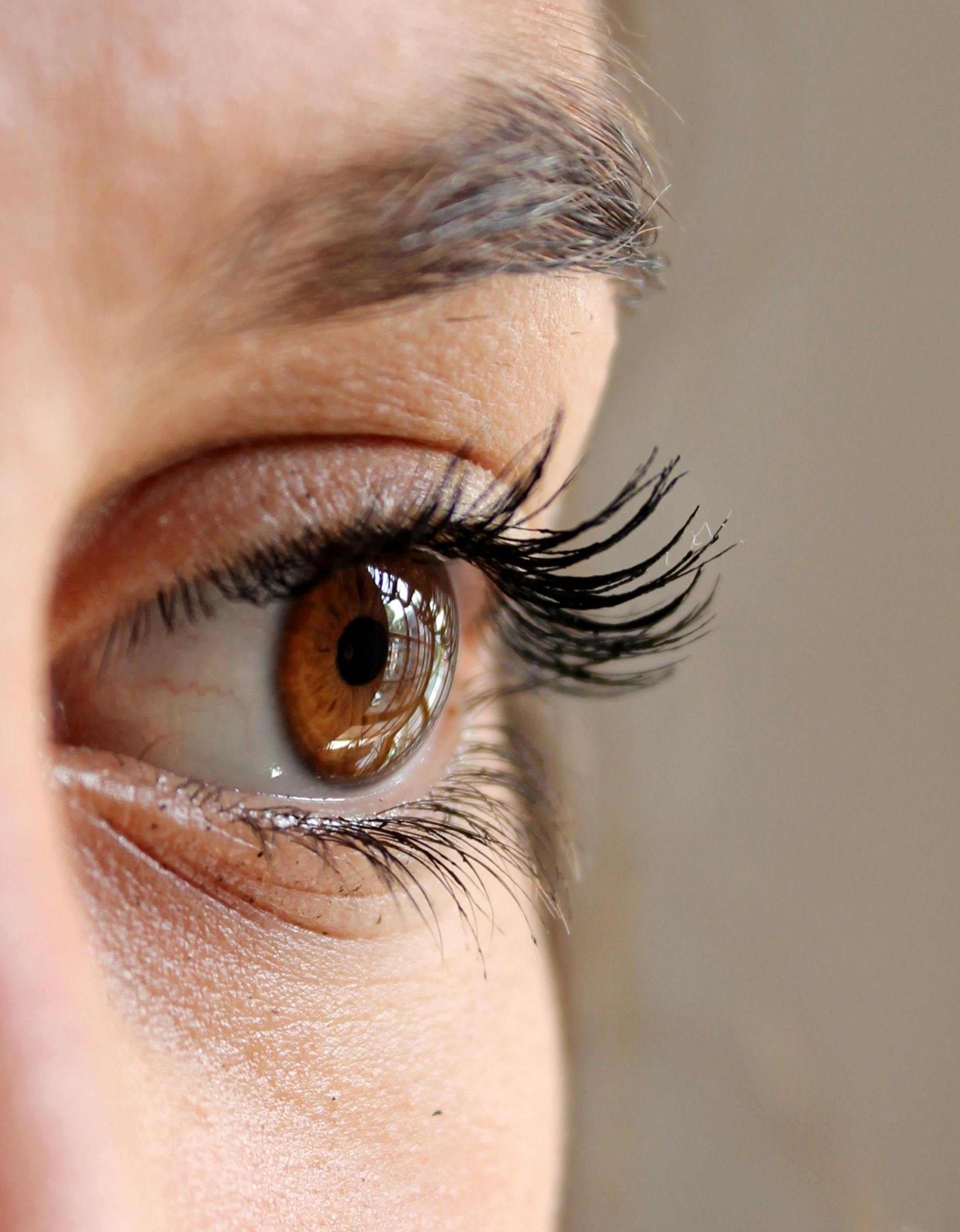
The key takeaway is simple: Eyelid muscles twitch, creating a physical sensation. Eyeball muscles move, creating a visual disturbance.
Deep Dive: The Common Eyelid Twitch (Myokymia)
This is almost certainly what you are experiencing. It's incredibly common—affecting most people at some point—and is universally benign.
- What it feels like: A fine, gentle, rippling or quivering sensation in the upper or (more commonly) lower eyelid. It can feel like a phone vibrating under your skin or a tiny worm wriggling.
- What it looks like: Sometimes it's not visible to others at all. Other times, a close observer can see a slight, continuous flutter of the skin.
- Impact on Vision: None. Your vision remains clear and stable, although the sensation itself can be distracting.
- Common Triggers: This is the classic list of lifestyle factors: stress, fatigue, caffeine, eye strain, dehydration, and nutritional imbalances. This is your body's "check engine" light for being overworked.
Benign Fasciculation Syndrome (BFS) and Eyelid Twitching
For some, eyelid twitching is not just a one-off event but a persistent symptom that lasts for weeks or months. This is often a hallmark of Benign Fasciculation Syndrome (BFS), a condition characterized by widespread, chronic muscle twitching without any associated weakness or disease. The eyelid is one of the most common "hotspots" for BFS, along with the calves. While persistent, it remains completely benign.
Deep Dive: The True Eyeball Spasm (Nystagmus)
Nystagmus is a completely different phenomenon. It is not a "feeling" but a visible, clinical sign of an underlying condition related to the complex systems that control balance and eye position—primarily the inner ear and the brain.
- What it feels like: Usually, nothing. You don't feel the muscles moving. Instead, you experience the result of the movement.
- What it looks like: An observer will see your eyeballs making repetitive, rhythmic, uncontrolled movements. This can be side-to-side (horizontal nystagmus), up-and-down (vertical nystagmus), or rotary.
- Impact on Vision: This is the key differentiator. Nystagmus causes the world to look like it is shaking or oscillating, a symptom called oscillopsia. It can significantly reduce visual acuity and make it difficult to focus.
- Common Causes: These are not simple lifestyle factors. Causes are medical and relate to the vestibulo-ocular system.
Understanding the Causes of Nystagmus
The system that keeps your eyes stable is called the vestibulo-ocular reflex (VOR). It connects your inner ear's balance sensors to your eye muscles. A problem anywhere along this pathway can cause nystagmus.
- Inner Ear Problems: Conditions like BPPV (benign paroxysmal positional vertigo), labyrinthitis, or Meniere's disease can send faulty balance signals, causing the eyes to move erratically. This is often accompanied by intense vertigo.
- Head Trauma: A concussion or other head injury can damage the delicate structures in the brainstem or cerebellum that coordinate eye movement.
- Neurological Conditions: Nystagmus can be a sign of conditions like Multiple Sclerosis (MS), stroke, or, very rarely, a brain tumor. In these cases, it is always accompanied by other serious neurological symptoms.
- Congenital Nystagmus: Some people are born with the condition.
- Medication Side Effects or Toxicity: Certain medications (especially anti-seizure drugs) or alcohol intoxication can temporarily induce nystagmus.
The Ultimate Comparison: Twitch vs. Spasm
| Feature | Eyelid Twitch (What You Likely Have) | Eyeball Spasm (Nystagmus - Rare) |
|---|---|---|
| Affected Part | Muscle in the eyelid skin (Orbicularis Oculi) | Muscles behind the eyeball (Extraocular Muscles) |
| Primary Sensation | A physical feeling of fluttering, vibrating, or quivering. | A visual sensation of the world shaking (oscillopsia). No physical feeling. |
| Effect on Vision | None. Vision remains perfectly stable and clear. | Causes blurry, unstable, or shaky vision. |
| Triggers | Stress, fatigue, caffeine, eye strain, dehydration. | Inner ear issues, head trauma, neurological conditions. |
| Medical Urgency | Benign. Manage lifestyle factors. See a doctor if it persists for months. | Requires prompt medical evaluation by a doctor. |
Why the Confusion? The Sensation vs. Reality
So if they are so different, why do so many people search for "eyeball spasm"? The answer lies in how our brains interpret sensations. A particularly strong or persistent eyelid twitch, especially in the lower lid close to the eyeball, can create the illusion that the entire eye is moving. Your brain feels the rapid muscle contractions and misinterprets the location.
This is completely normal. The sensation can be powerful enough to make you believe your eyeball itself is spasming. But here is the simple test: look in a mirror. If you see your eyelid skin fluttering but your eyeball is perfectly still, you have an eyelid twitch. If you see your actual eyeball rhythmically darting back and forth, you have nystagmus and should see a doctor.

When to See a Doctor: A Clear, Actionable Guide
Navigating symptoms can be stressful. Here’s a clear guide on when to seek medical advice.
See a Doctor if You Experience Eyelid Twitching WITH:
- Forceful closure of the eyelid that you can't control (potential Blepharospasm).
- The twitch spreading down one side of your face to your cheek and mouth (potential Hemifacial Spasm).
- A drooping eyelid (ptosis) that doesn't resolve.
- Redness, swelling, or any kind of discharge from the eye.
- The twitch persists for more than 3 months despite actively managing lifestyle triggers.
See a Doctor IMMEDIATELY if You Experience:
- Visible, rhythmic, back-and-forth movement of your eyeballs (Nystagmus).
- A sensation that your surroundings are shaking or oscillating (Oscillopsia).
- The eye symptom is accompanied by intense dizziness, vertigo, loss of balance, or severe headaches.
What to Expect at the Doctor's Office
If you see a doctor for these symptoms, they will perform a targeted neurological exam. For an eyelid twitch, they will check your facial muscles, strength, and reflexes. For a suspected eyeball spasm, they will perform specific tests like the Dix-Hallpike maneuver to check for vertigo and carefully observe your eye movements as you track their finger. They may order an MRI if they suspect a central neurological cause. This exam is highly effective at differentiating benign issues from serious ones.
Conclusion: It's an Eyelid Twitch, Not an Eyeball Spasm
After reading this guide, you should feel a profound sense of relief. The term eyeball spasm is a common misnomer for what is almost always a benign eyelid twitch. The difference is not subtle—it is a clear distinction between a minor, lifestyle-related annoyance and a significant medical sign requiring professional evaluation.
By understanding that a true eyeball spasm affects your vision directly and causes the world to appear unstable, you can confidently categorize your symptom. If your vision is stable and you simply feel a flutter in your eyelid, you can now focus your energy where it matters: managing stress, improving sleep, and reducing caffeine. You don't have a rare eye disease; you have a body that's asking for a much-needed break.
Scientific References
Peer-reviewed and authoritative sources on eyelid myokymia (benign eyelid twitch), true eyeball movement (nystagmus), oscillopsia, the vestibulo-ocular reflex, and related red-flag conditions (blepharospasm, hemifacial spasm, vestibular causes like BPPV/neuritis/labyrinthitis).
- Patel BC, et al. Eyelid Myokymia. StatPearls. Updated 2023. (Benign eyelid twitch; triggers include stress, fatigue, caffeine.)
NCBI Bookshelf - Patel BC. Eyelid myokymia. 2024. (Definition and clinical features of eyelid myokymia.)
PubMed - Banik R. Chronic myokymia limited to the eyelid is a benign condition. J Neuroophthalmol. 2004;24(1):30–32. (Benign course; responds to botulinum toxin.)
PubMed - Sekhon RK, et al. Nystagmus Types. StatPearls. Updated 2023. (Nystagmus causes oscillopsia/blurred vision; overview of types.)
NCBI Bookshelf - Straube A. Nystagmus and oscillopsia. Curr Opin Neurol. 2012;25(1):38–47. (Oscillopsia as hallmark of pathologic eye movements.)
PubMed - Jeong SH, et al. Update on Nystagmus and Other Ocular Oscillations. J Clin Neurol. 2021;17(3):425–437. (Clinical approach to nystagmus; visual consequences like oscillopsia.)
PMC (full text) - Somisetty S, et al. Neuroanatomy, Vestibulo-ocular Reflex. StatPearls. Updated 2023. (VOR pathway linking inner ear to extraocular muscles.)
NCBI Bookshelf - Bhattacharyya N, et al. Clinical Practice Guideline: Benign Paroxysmal Positional Vertigo (Update). Otolaryngol Head Neck Surg. 2017;156(3_suppl):S1–S47. (Diagnosis with Dix-Hallpike; nystagmus patterns.)
PubMed - Bae CH, et al. Current diagnosis and treatment of vestibular neuritis. Clin Exp Otorhinolaryngol. 2021;14(4):355–365. (Peripheral vestibular causes of nystagmus; management.)
PMC (full text) - Barkwill D, et al. Labyrinthitis. StatPearls. Updated 2023. (Inner-ear inflammation presenting with vertigo/nystagmus and auditory symptoms.)
NCBI Bookshelf - Defazio G, et al. Diagnostic criteria for blepharospasm: A multicenter international study. Parkinsonism Relat Disord. 2021;89:32–38. (Involuntary eyelid closure; distinguishes from simple myokymia.)
PMC (full text) - Chopade TR, et al. Hemifacial Spasm. StatPearls. Updated 2024. (Unilateral facial spasms spreading from eyelid to cheek/mouth; evaluation.)
NCBI Bookshelf
© 2026 BFS Organization. All rights reserved.
Not medical advice. Always consult with a healthcare professional.