Deep Dive | September 9, 2025
Eye Twitching Anxiety: Why Stress Makes It Worse (and How to Stop It)
It’s the ultimate catch-22: the more you worry about your eye twitching, the more it twitches. This guide breaks down the science behind this vicious cycle and gives you the tools to finally break free.
The connection between a fluttering eyelid and a racing mind is profoundly intimate. For many, an innocent eye twitch is the first physical symptom that signals an overstressed nervous system. But when that twitch persists, it often transforms from a simple signal into a powerful source of anxiety itself. If you've found yourself in a loop where worrying about the twitch only makes it worse, you are experiencing the very real phenomenon of eye twitching anxiety.
This isn't just in your head. The link between your psychological state and this physical symptom is a well-understood physiological process. The stress hormones that flood your body during periods of anxiety are potent nerve stimulants, and the delicate muscles of your eyelid are often the first to react.
In this definitive guide, we will explore this vicious cycle in depth. We’ll cover the science of how stress triggers fasciculations, why health anxiety latches onto this specific symptom, and most importantly, provide a step-by-step, actionable plan to calm both your mind and your muscles. For a broader look at all potential triggers, we recommend reading our pillar article: Why Is My Eye Twitching? A Deep Dive into Causes & Anxiety.
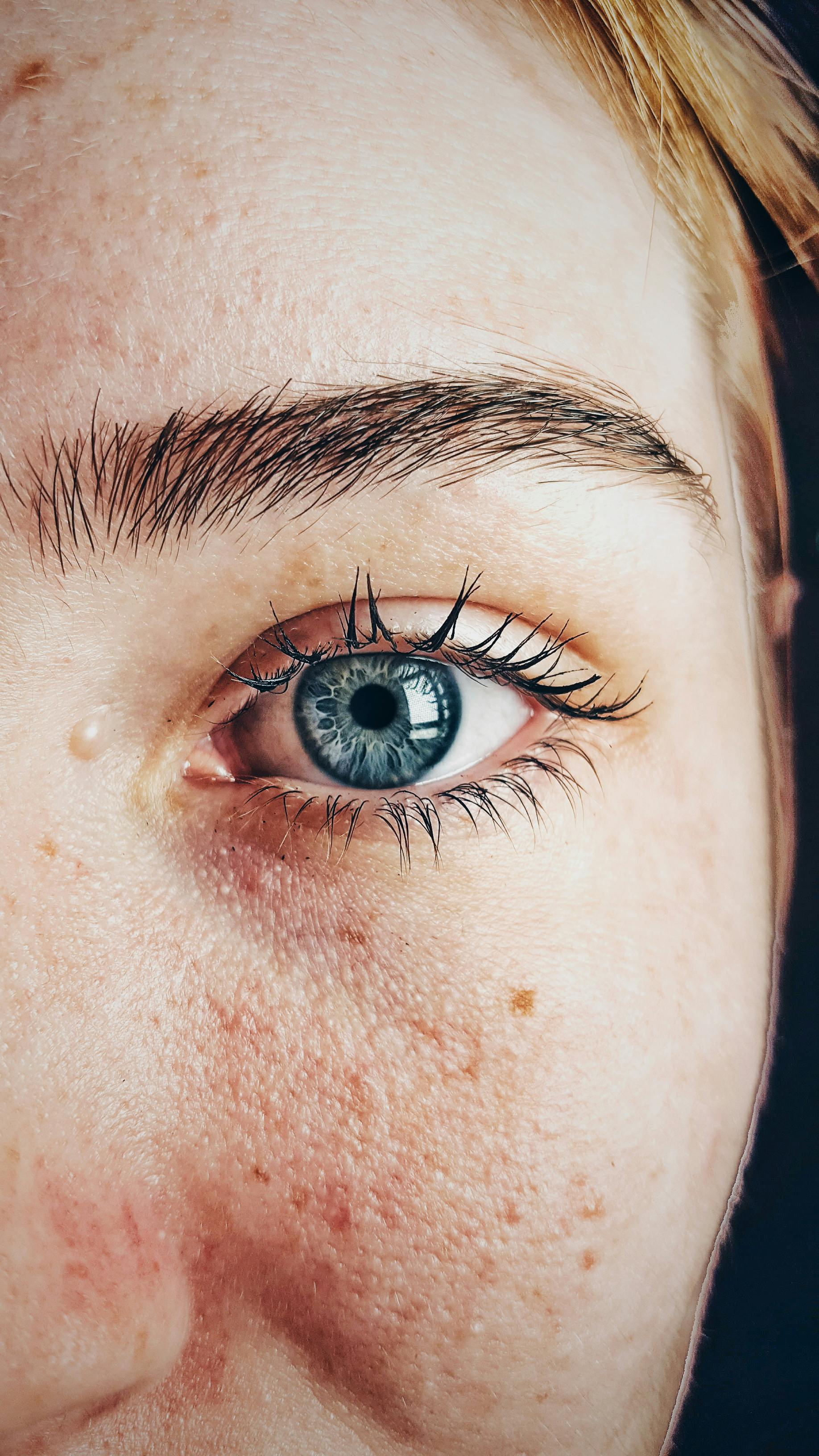
The Science: How Your Brain Creates a Stress-Induced Twitch
To break the cycle, you first need to understand the machinery behind it. When your brain perceives a threat—whether it’s a looming work deadline, a difficult conversation, or even the fear of the twitch itself—it activates the sympathetic nervous system, also known as the "fight or flight" response.
Step 1: The Hormone Cascade
Your adrenal glands release a cocktail of stress hormones, primarily adrenaline (epinephrine) and cortisol. These are not subtle chemicals; they are powerful agents designed to prepare your body for immediate action.
- Adrenaline: Increases heart rate, blood pressure, and energy supplies. It also makes your nerves more sensitive and ready to fire.
- Cortisol: The body's primary stress hormone, it floods your system with glucose for a quick energy boost and heightens your brain's use of that glucose. It also increases muscle tension.
Step 2: The Effect on Your Nerves and Muscles
This hormonal surge has a direct impact on your neuromuscular system. Think of your nerves as electrical wires and your muscles as the devices they power. Stress and anxiety effectively turn up the voltage on the entire system.
- Lowered Action Potential Threshold: The "gate" that prevents a nerve from firing becomes easier to open. This means that smaller, random signals that would normally be ignored can now trigger a nerve impulse.
- Increased Muscle Tension: Cortisol causes muscles to tense up, preparing them for action. The tiny, delicate orbicularis oculi muscle in your eyelid is held in a state of constant, low-grade tension, making it a prime candidate for misfires.
The result? A nerve connected to a small bundle of muscle fibers in your eyelid fires without a command from your brain. That's your twitch. It’s a direct, physiological consequence of a nervous system on high alert.
This cycle is so common and powerful that it has its own name in the medical community: Fasciculation Anxiety Syndrome. It describes a condition where benign fasciculations (twitches) trigger significant health anxiety, which in turn perpetuates and worsens the fasciculations. Recognizing that this is a known medical pattern is the first step toward recovery.
Breaking Down the Vicious Cycle of Eye Twitching Anxiety
Understanding the science is one thing, but living inside the feedback loop is another. Let’s walk through the psychological and behavioral steps that keep the cycle going.
- 1. The Initial Twitch: It starts benignly, often due to a real trigger like lack of sleep.
- 2. Hypervigilance (The Checking Behavior): You become acutely aware of the sensation. You start checking it in the mirror, touching it, and focusing all your attention on it. This focus tells your brain, "This is important! This is a threat!"
- 3. Catastrophic Thinking (Dr. Google): You search for answers online. Search engine algorithms often prioritize dramatic results. You quickly find articles about worst-case scenarios like ALS, MS, or brain tumors, skipping over the 99% of content about stress and fatigue.
- 4. The Anxiety Spike: Your brain now has "evidence" of a serious threat. This triggers the full-blown stress hormone cascade described above.
- 5. The Physical Reinforcement: The flood of adrenaline and cortisol makes the twitching more frequent and stronger. This physical reinforcement serves as "proof" that your fears were justified.
- 6. The Cycle Solidifies: Now, the fear of the twitch is a bigger trigger than the original cause (like lack of sleep). The cycle becomes self-sustaining, a powerful engine of anxiety and physical symptoms.
The Action Plan: How to Break the Cycle and Stop the Twitch
Breaking this cycle requires a two-pronged approach: you must manage the physical triggers while simultaneously dismantling the anxiety that fuels them.
Part 1: Address the Physical Triggers (Calm the Body)
1. Master Your Sleep
This is non-negotiable. Aim for 7-9 hours of consistent, high-quality sleep. Treat your bedtime like an important appointment. No screens for the last hour. Make your room cool, dark, and quiet. Sleep is when your nervous system repairs itself.
2. Mind Your Minerals
Anxiety can deplete magnesium, a critical mineral for calming the nervous system. Ensure you are getting enough through your diet (leafy greens, nuts, seeds, dark chocolate) or discuss a magnesium glycinate supplement with your doctor. Proper hydration with electrolytes is also key.
3. Taper Your Caffeine
If you're in a high-anxiety state, your nervous system is already overstimulated. Adding caffeine is like pouring gasoline on a fire. Gradually reduce your intake to give your nerves a chance to calm down.
Part 2: Dismantle the Anxiety (Calm the Mind)
1. Implement a "No-Checking" Rule
This is the most powerful behavioral change you can make. Every time you check the twitch in the mirror, you reinforce the anxiety. Make a commitment to stop. When you feel the urge, acknowledge it ("I feel the urge to check my eye") and then immediately shift your focus to a different activity. Do this for three days, and you will notice a significant decrease in your anxiety.
2. Practice Cognitive Reframing
Your thoughts create your anxiety. Challenge them directly.
- Instead of: "What if this twitch is a sign of something terrible?"
- Say to yourself: "The evidence shows that for over 99% of people, this is a benign symptom of stress. I have no weakness. Therefore, it is benign."
- Instead of: "I can't stand this feeling!"
- Say to yourself: "This feeling is uncomfortable, but it is not dangerous. It will pass."
3. Learn to Regulate Your Nervous System with Breathing
Deep, slow breathing is a direct antidote to the "fight or flight" response. It activates the vagus nerve and the parasympathetic nervous system ("rest and digest"). Try "Box Breathing":
- Inhale slowly for a count of 4.
- Hold your breath for a count of 4.
- Exhale slowly for a count of 4.
- Hold at the bottom for a count of 4.
- Repeat for 2-5 minutes whenever you feel anxious or notice the twitch.
4. Use Mindfulness to Detach from the Sensation
Mindfulness is not about stopping the twitch; it's about changing your relationship to it. When you feel the twitch, instead of panicking, simply observe it without judgment. Say to yourself, "There is a twitching sensation in my eyelid." By observing it like a neutral scientist instead of a terrified patient, you strip it of its emotional power. When you remove the fear, the feedback loop starves.
When to Seek Professional Help for Anxiety
While these self-help strategies are incredibly effective, sometimes the anxiety is too entrenched to manage alone. If your eye twitching anxiety is significantly impacting your daily life, causing panic attacks, or interfering with your work and relationships, it is a sign of strength to seek professional help.
A therapist, particularly one who specializes in Cognitive Behavioral Therapy (CBT) for health anxiety, can provide you with a structured program to dismantle these thought patterns and behaviors. A single, reassuring visit to a neurologist for a clinical exam can also be a powerful circuit-breaker for the anxiety cycle.
Conclusion: You Have the Power to Break the Cycle
The link between eye twitching and anxiety is powerful, but it is not unbreakable. The twitch is not the enemy; the fear of the twitch is. By understanding the science behind the stress response, you can see that the twitching is a logical, physical reaction, not a mysterious harbinger of doom.
Focus your energy not on the symptom, but on the system. By nourishing your body with sleep and proper nutrition, and by calming your mind with proven anxiety-reduction techniques, you are addressing the root cause. The twitch is just a messenger. Listen to its message, give your body the rest and care it's asking for, and watch as both the twitch and the anxiety begin to fade.
Scientific References
Peer-reviewed and authoritative sources supporting anxiety as a trigger for benign eyelid myokymia, the stress-hormone/neuromuscular link, sleep and caffeine effects, and evidence-based anxiety interventions (CBT, mindfulness, slow breathing).
- Patel BC, et al. Eyelid Myokymia. StatPearls [Internet]. Updated 2024. (Benign course; common triggers include stress, fatigue, caffeine, ocular surface irritation.)
NCBI Bookshelf - Banik R, Miller NR. Benign essential eyelid myokymia. J Neuroophthalmol. 2004;24(4):290–292. (Clinical description; typically stress-related and self-limited.)
PubMed - Filippakis G, Schirinzi T, et al. Benign fasciculation syndrome: a prospective observational study with a focus on anxiety. J Neurol Sci. 2018;391:55–60. (BFS frequently coexists with anxiety; supports the anxiety–fasciculation loop.)
PubMed - Drake CL, Roehrs T, Shambroom J, Roth T. Caffeine effects on sleep taken 0, 3, or 6 hours before bedtime. J Clin Sleep Med. 2013;9(11):1195–1200. (Even 6 h pre-bed caffeine disrupts sleep; increases twitch susceptibility.)
PubMed - Hofmann SG, Asnaani A, Vonk IJJ, Sawyer AT, Fang A. The efficacy of cognitive behavioral therapy: a review of meta-analyses. Cognit Ther Res. 2012;36:427–440. (CBT effectiveness for anxiety disorders; supports no-checking & cognitive reframing.)
PMC
© 2026 BFS Organization. All rights reserved.
Not medical advice. Always consult with a healthcare professional.