Body-Part Guide | August 3, 2026
Why Is My Arm Twitching? Causes, Anxiety, and When to Worry
That flutter in your bicep or forearm is one of the most common — and most benign — twitches there is. Here's the complete picture of what's really going on, and how to calm it.
Quick answer: Arm twitching — in the bicep, tricep or forearm — is almost always harmless. The usual causes, often stacked together:
- Exertion: lifting, carrying or a hard workout
- Stress and anxiety
- Caffeine or other stimulants
- Poor sleep and fatigue
- Dehydration or low electrolytes
A twitch in the left arm is a muscle event, not a heart symptom; heart problems cause chest pain or pressure, breathlessness, sweating or nausea. Get urgent help for any of those. Otherwise, see a doctor if you notice real weakness in your grip or arm, or visible muscle shrinking.
You're sitting still, or reaching for something, and you feel it — a small, involuntary flicker deep in your arm. Maybe it's the belly of your bicep giving a little jump, maybe a ripple runs across your forearm. It stops, then it comes back. And if you've since typed "why is my arm twitching" into a search bar at 1am, you already know how quickly a tiny movement can spiral into a very big worry.
Let's take the pressure down right away: an isolated twitching arm, with no other symptoms, is one of the most common and most harmless things we hear about. In the overwhelming majority of cases it comes from something completely ordinary — an overworked muscle after a workout, a stressful week, one coffee too many — and it settles once you understand it and stop feeding the worry.
This guide is deliberately thorough, because half the battle with any twitch is simply understanding it. We'll cover what an arm twitch actually is, every common reason it happens, the specific worry many people have about the left arm and the heart, the anxiety loop that makes it so sticky, the honest truth about the scary conditions people fear, and a practical plan to settle it down. We'll stay honest throughout: most arm twitching is benign — but "most" is not "all," so we'll also be clear about the handful of signs that genuinely deserve a doctor's attention.
What a twitching arm actually is
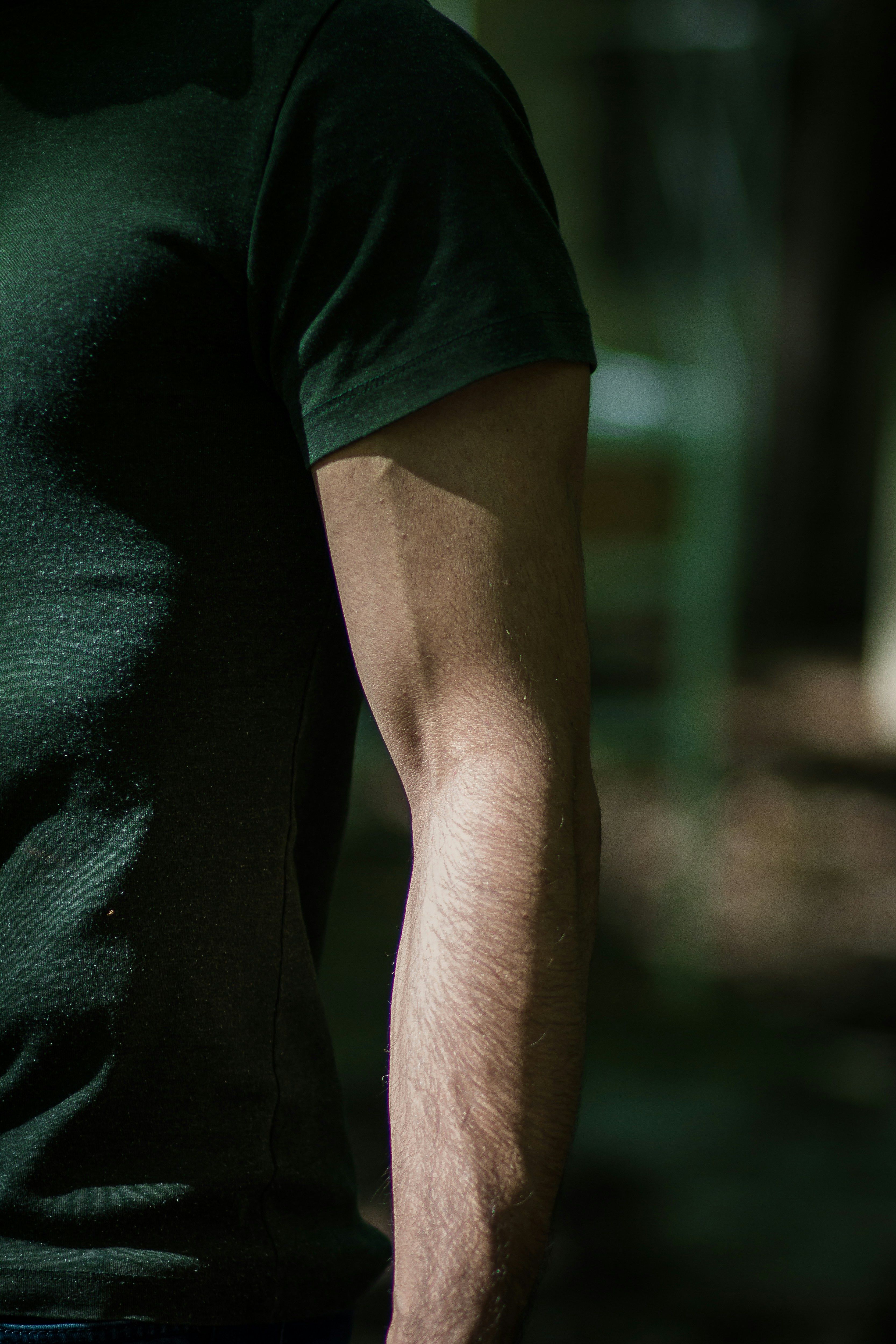
A muscle twitch — the medical term is a fasciculation — is a small, spontaneous contraction of a tiny bundle of muscle fibres, fired off by the nerve that feeds them. It happens entirely on its own, without you deciding to move. Think of it as a single motor unit "misfiring" briefly: harmless static on the line rather than a broken circuit.
The arm is a particularly common place to notice this, and there are good mechanical reasons why. Your arm is a busy stack of muscles, large and small. The biceps at the front and the triceps at the back move your elbow and do the heavy pulling and pushing of daily life. Below them, the forearm is packed with a dense bundle of smaller muscles that control your wrist and every finger — the same muscles that grip, type, and carry. Large muscles like the bicep can produce a slow, rolling twitch you can actually watch move under the skin, while the smaller forearm muscles tend to give quicker, finer flickers. Both are extremely common, and both are especially likely to show up after exertion.
Here is the single most important feature of a benign twitch: it doesn't take away your strength or control. Your arm still lifts a bag, carries the groceries, and pushes a door normally. It's a sensation, not a loss of function — and that distinction, as we'll see, is the whole ballgame.
The common, harmless causes of arm twitching
Arm twitching rarely has one single cause. Far more often, a few everyday factors stack on top of each other until the muscle's threshold tips over. Here are the usual culprits, in roughly the order we see them.
1. Overuse and exertion
This is the big one for arms specifically. A hard session at the gym, a day of lifting or carrying, moving furniture, painting a ceiling, or repetitive work with your hands all ask the arm muscles to fire hard, over and over. Fatigued muscles are twitchy muscles — when a motor unit has been worked to exhaustion, its resting electrical activity gets a little jumpy afterwards, and fasciculations are the result. This is why a twitching bicep the day after a heavy arm workout is almost a rite of passage. If your twitch appeared after a workout, a big lifting job, or a repetitive task, this is very likely your answer, and it typically fades as the muscle recovers.
2. Stress and anxiety
A keyed-up nervous system is a twitchy nervous system. When you're stressed, your body sits in a low-grade "fight or flight" state that raises the excitability of your nerves and muscles — so twitches happen more often. Anxiety then adds a second, sneakier effect: it turns up your awareness, so a flicker you'd normally never register becomes impossible to ignore. This is why so many people first notice arm twitching during an already-stressful stretch of life.
3. Caffeine and other stimulants
Coffee, energy drinks, strong tea, and pre-workout supplements are stimulants — their whole job is to make your nervous system more active. That's great for alertness and unhelpful for a twitchy arm. Nicotine works the same way. Pre-workout is a double hit here: a big dose of stimulants landing right as you fatigue the arm muscles is a perfect recipe for a post-gym twitch. Because caffeine has a long half-life, an afternoon coffee can still be nudging your nerves at bedtime, right when you're lying still and most likely to notice a twitch. This is one of the easiest triggers to test: trim it for a week or two and watch what happens.
4. Fatigue and poor sleep
Sleep is when your nervous system does its housekeeping. Short-change it — or sleep badly — and everything runs a little hot the next day, including the muscles of the arm. A stretch of late nights is a classic trigger for a new twitch, and catching up on rest is often the quiet fix.
5. Dehydration and low electrolytes
Muscles and nerves rely on a careful balance of minerals — magnesium, potassium, calcium, sodium — to fire smoothly and then relax. When you're dehydrated or running low on these (after exercise, heavy sweating, alcohol, or simply not eating well for a few days), that balance drifts and muscles become more excitable. Since arm twitches so often follow a sweaty workout, this factor and the exertion above frequently arrive together. It's a common, entirely reversible contributor.
6. A gentle note on the "is my left arm twitch my heart?" worry
This one deserves its own paragraph, because it's a fear that catches a lot of people — especially with the left arm. So let's be clear and reassuring: an isolated muscle twitch is a muscle and nerve event, not a cardiac symptom. A small, localized flicker you can feel or see in one spot of your arm is your muscle fibres firing, and it has nothing to do with your heart, on either side. Heart problems simply don't announce themselves as a tiny twitch. They present with chest pain or pressure, breathlessness, sweating, nausea, or lightheadedness — a very different picture from a flicker in the bicep or forearm.
That said, we'll always be responsible here: if you ever have genuine cardiac warning signs — chest pain or a squeezing pressure in the chest, shortness of breath, a cold sweat, or arm pain that radiates alongside those symptoms — that is not something to sit and Google. Please treat it as urgent and seek emergency medical care. A benign muscle twitch and a genuine cardiac symptom are two completely different experiences, and knowing the difference is exactly what lets you set the twitch worry down.
Notice how ordinary all of that is. There's nothing exotic on the list — which is exactly the point. The usual recipe for a twitching arm is just modern life turned up a little too high: a hard workout, too much coffee, too little sleep, and a stressful week to tie it together.
When it's part of the bigger picture: BFS
If your twitching isn't limited to your arm — if it hops around your body, showing up in your calves, eyelids, thumbs, or elsewhere — you may have come across the term Benign Fasciculation Syndrome (BFS). BFS is a harmless condition in which muscles across the body twitch, flicker, and buzz without any underlying disease. The defining word is benign: it does not damage your muscles, does not cause weakness, and does not progress to something worse. What it can do is capture your attention completely — which is why managing BFS is far more about calming the nervous system and easing the worry than about the twitches themselves. If this sounds familiar, our guide on muscle twitching without weakness is a good next step.
The anxiety loop: why a tiny twitch won't let go

Here's the part that explains why a harmless flicker can dominate your week. It's a self-reinforcing loop, and understanding it is genuinely one of the most useful things you can do:
- You notice a twitch and feel a spark of alarm — what is that?
- The alarm releases stress hormones, which make the nervous system more excitable — so you twitch more.
- You start scanning for it, flexing the arm, poking the bicep, watching the forearm. Attention makes any sensation feel bigger.
- More twitches plus more attention "confirm" that something is wrong, which feeds the alarm — and round it goes.
The twitch didn't get more dangerous at any point in that cycle — but it got louder, because worry and vigilance were pouring fuel on it. The good news hidden in this is empowering: because anxiety is driving so much of it, calming the anxiety often quiets the twitch directly. You're not stuck.
"But could it be ALS?" — the honest answer
Because the arms do so much of daily life's work, arm twitching is one of the most common triggers for ALS fear — people read that arm weakness can be an early sign and put two and two together at 2am. So here is the distinction that matters most, and it's a genuinely reassuring one:
ALS is defined by loss of function, not by twitching sensations. In ALS, fasciculations appear in muscles that are already visibly weak and wasting away — the twitching is a side-effect of muscle that is failing, never the opening act on its own. Doctors look for clinical weakness: a grip that is objectively giving out, an arm that can no longer lift or hold what it used to, visible shrinking of the muscle. An arm that twitches but still lifts a bag, carries the shopping, and works normally is behaving in the opposite way to how the feared conditions actually announce themselves.
We can't examine you, so if you're worried, one check-up for peace of mind is completely reasonable — a doctor can test your strength in minutes. But the pattern of "twitching with full, normal strength" is one of the most reassuring pictures there is. For a deeper look, see our full comparison of BFS vs ALS.
What actually helps

Because the root is almost always an overworked or over-alert system, the things that help are the things that let it settle. None of them are dramatic — consistency, not intensity, is what does the work.
- Rest the arm. If a workout or a big lifting job set it off, give the muscle real recovery time. Ease back on heavy arm training for a few days, gentle stretching and light movement over total stillness. If exertion is the trigger, a week or so of this alone often settles it.
- Ease off stimulants. Trim caffeine — especially after midday and in pre-workout — and cut nicotine if that applies. This is the single most testable change, and often the most rewarding.
- Protect your sleep. A consistent bedtime and a genuine wind-down give your nervous system its nightly reset. Aim for 7–9 hours.
- Lower the background stress. Slow breathing with a longer exhale than inhale, gentle movement, time outdoors, and — importantly — stepping away from repeatedly Googling symptoms all take the volume down. Breaking the checking habit is a real intervention, not just advice.
- Support your body. Steady hydration and a balanced diet rich in magnesium and potassium — leafy greens, nuts, seeds, beans, bananas, whole grains — help keep muscles and nerves calm, especially around exercise.
- Give it time. Benign twitches wax and wane. An arm twitch that's been present for days or a couple of weeks and is drifting in intensity is behaving exactly as a benign twitch does.
A note on supplements: people often ask about magnesium. It's a reasonable thing to explore, but the right form and amount depend on you and anything else you take — so that's a short conversation for your doctor or pharmacist, not a number from a guide.
When to check in with a doctor
Arm twitching on its own is almost always benign. But it's worth arranging a medical assessment if the twitching comes alongside any of these:
- Genuine weakness — an arm that is objectively weaker, dropping things, or struggling with tasks it used to handle easily
- Visible muscle shrinking or wasting, especially one arm looking noticeably thinner than the other
- Numbness, tingling, or pain that is spreading or clearly worsening (this can point to a treatable nerve issue — worth checking either way)
- Twitching that keeps spreading and intensifying relentlessly over time, rather than waxing and waning
- Any genuine cardiac warning signs — chest pain or pressure, breathlessness, a cold sweat, or arm pain radiating alongside those — which warrant urgent medical care, not a web search
- Anything that simply worries you enough that reassurance from a professional would genuinely help you rest
Seeking one evaluation for peace of mind is completely reasonable, and a good doctor will understand. This guide exists to inform and reassure you — never to talk you out of getting checked.
Common questions
| Is arm twitching serious? | Almost always no. On its own, without weakness, it's one of the most common benign twitches there is — especially after exercise or exertion. |
| Is a left-arm twitch a heart problem? | No. An isolated muscle twitch is a muscle and nerve event, not a cardiac one. Heart trouble shows up as chest pain or pressure, breathlessness, or sweating — not a small flicker. Those genuine symptoms, though, always need urgent care. |
| Can anxiety really cause it? | Yes — very commonly. Anxiety both produces twitches and makes you hyper-aware of the ones you already have. |
| Why won't it stop? | Usually because the triggers (exertion, stress, caffeine, poor sleep) are ongoing — and because watching it closely keeps the nervous system alert. It tends to fade as those ease. |
| How long will it last? | Benign arm twitches often settle within days to a few weeks as triggers ease and muscles recover. They can come and go — that waxing and waning is itself a reassuring, benign pattern. |
The bottom line
An arm that twitches but still works normally — flickering at rest, easing when you're absorbed in something, coming and going with your workouts, stress, and sleep — is one of the most common and most benign experiences we hear about. It is your body reacting to ordinary strain, not a warning of something rare, and a localized flicker is a muscle event, not a message from your heart. Meet it with steadiness rather than alarm: rest the arm, ease the everyday triggers, calm the nervous system, and loosen the grip of the worry. In the great majority of cases, it grows quiet on its own.
This article is for information and education only and is not a substitute for professional medical advice, diagnosis, or treatment. Always seek the guidance of your physician or another qualified health provider with any questions about a medical condition.
© 2026 BFS Organization. All rights reserved.
Not medical advice. Always consult with a healthcare professional.